By Sarzah Yeasmin
During last semester of graduate school at Harvard, I took a course on archival research. That spring, I spent my days underground, in the quiet belly of Lamont Library—the part that does not sleep, even when the rest of the campus does. I used to arrive at the archive with Thai milk tea, a cup of matcha or a melon latte and used to place it carefully aside, far from the massive, leather-bound volumes whose pages felt ceremonial. Their cursive loops were confident, assured, written by people who seemed to know that history would remember them. I was reading letters written 200 years ago.
These were letters written by Charles William Eliot, Harvard’s longest-serving president, from a period when American institutions were learning how to outlive their founders—and how to reproduce themselves.
As I read, the university revealed itself not as an abstract ideal but as an accumulation: of land around Boston and Cambridge, of donor loyalty, of young men groomed to inherit authority. The Boston Brahmins appeared everywhere between the lines and signatures. They were the old Protestant elite of New England—families whose wealth came from shipping, railroads, industry, and early American governance, and whose social power rested as much on manners and lineage as on money. The Cabots, Eliots, Everetts, Websters. Names that now live on as streets, halls, libraries. Names that once quietly opened doors.
In one letter, Eliot reflected on the academic promise of students arriving from East Asia, noting their seriousness, discipline, and capacity for scholarly life. In others, he reassured alumni and benefactors about the progress of their sons—how promising they were, how well they were settling into the institution. Merit appeared often in these letters, but it was never abstract. It was personal, familiar, legible. During Eliot’s presidency, Harvard grew from a regional college into a
modern university. But it did so by deciding—carefully and repeatedly—who could be trusted to carry its future.
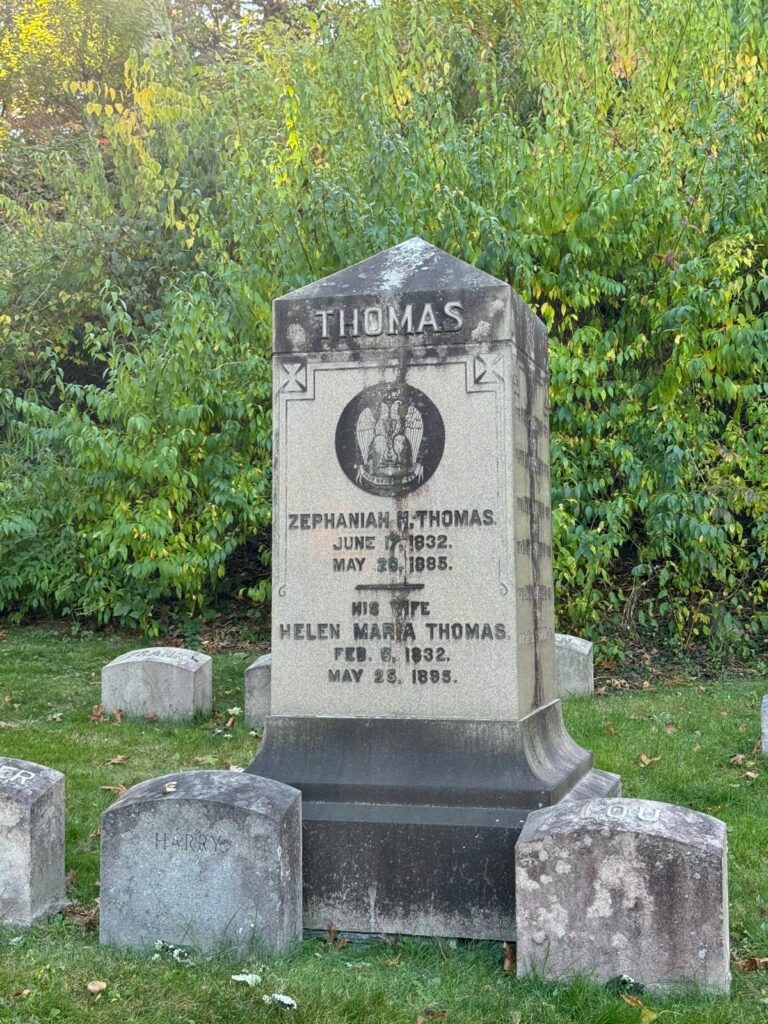
In Octobers, I walked through the Mount Auburn Cemetery, submerged in the golden orange Fall foliage. This is where many of these families are interred. Cabots beside Eliots, Everetts beside Websters. Headstones bore accomplishments and revered qualities: inquisitive, innovative, a devoted husband, a loving wife. Some had gone to Yale, some to Harvard. Some had built the first something. Legacy, engraved in stone. Later I would encounter Anthony Jack’s phrase the privileged poor—students who make it into elite institutions without inheriting the ease that allows others to belong effortlessly. They arrive with talent and discipline, but not with the unspoken knowledge of how to speak, network, fail safely, or ask for help. Reading Jack, I realized that what I had seen in the archives was not only history, but continuity.
Michael Sandel calls this faith in sorting people by achievement the tyranny of merit—the belief that success reflects virtue and failure reflects deficiency. Merit becomes not just a criterion, but a moral story. It absolves institutions from reckoning with inheritance by framing advantage as deserved. The numbers tell the same story more quietly. Raj Chetty’s research shows that at elite American universities, students from families in the top one percent outnumber those from the
bottom half combined. Children of alumni remain far more likely to be admitted than equally qualified applicants without that lineage. Mobility exists, but it moves through narrow gates.
Standing among those graves, I thought about how institutions remember. They remember names. They remember families. They remember who was always meant to arrive prepared. The old boys’ club no longer announces itself openly. It has learned a new language—diversity, excellence, global talent. But its architecture remains intact,
The archives taught me this: history does not disappear. It learns how to pass.
Sarzah Yeasmin is a Bangladeshi born American citizen moved to US in 2013. She is an education and policy researcher.