

By Laila Tasmia
On my annual leave in January 2025, I treated myself and my spouse a trip to the Maldives.
But I didn’t feel like I was in another country. It wasn’t about the scenery or the atmosphere; it was about the people who spoke my language—“Bangla.” I was a bit surprised and excited to see Bangladeshi migrants in the immigration line, talking about their job visas. Little did I know that wherever I would go, I would see at least a couple of Bangladeshis working there. I couldn’t believe that during my entire visit, I didn’t come across a single place in the tourism sector where I didn’t find a Bangladeshi migrant.
What really struck me was the professionalism of Bangladeshi migrants. The servers, the waiters, their fluent English, and their client-centric attitude—it was outstanding, even compared to my experiences in other countries.
At one point during my trip, I stayed on a remote (quite far) private yet local island offering authentic local food and facilities. The small family-run resort where I stayed also had a Bangladeshi migrant, Karim—the one-man army responsible for all maintenance. He seemed happier than us and said, “This is the first time I have seen a Bangladeshi tourist in this remote and local island in my six months of working.” He started taking selfies to share this joy with his fellow Bangladeshi migrants. It was a moment filled with pride and joy.
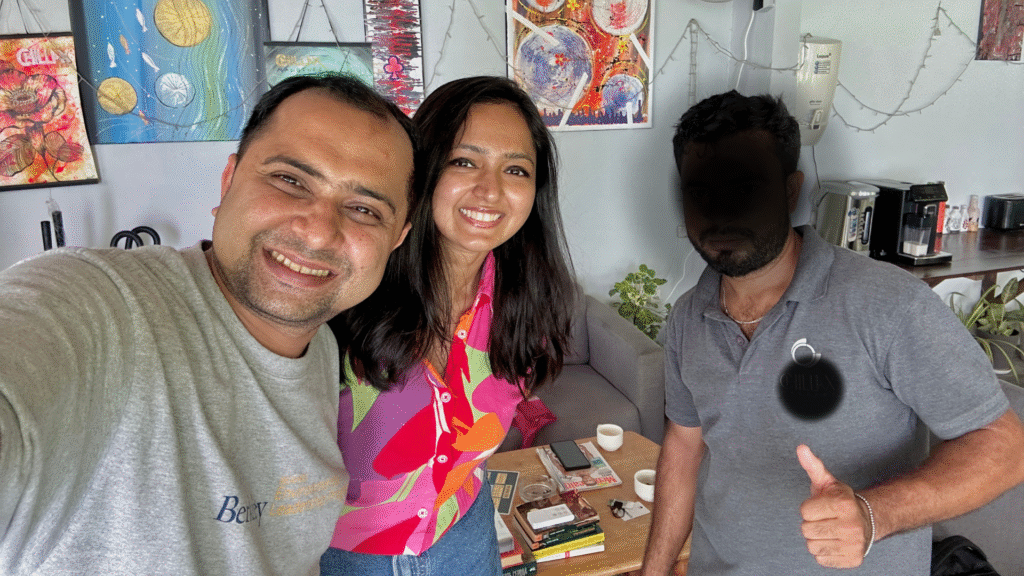
This conversation with Karim led to deeper discussions about why Bangladeshi migrants choose the Maldives as their destination, their migration journeys, the pros and cons of working there, and their expectations for better labor migration practices. When asked how long they had been in the Maldives, the responses varied—six months, a year, 12 years, even 18 years. However, one reply stood out: “I was!” when I asked if someone was Bangladeshi. That sparked my curiosity to explore the stories behind these varied responses.
The reasons for choosing migration to the Maldives were similar in all responses—the behavior of Maldivians as employers is mostly good, the salary is better, the weather and food are close to Bangladeshi culture, and the overall environment seems easier to adapt to.
Reflecting on Bangladeshi migration to the Maldives, it became clear that they are integral to the workforce, especially in tourism and construction. Of the nearly 200,000 foreign workers in the Maldives, about 100,000 are Bangladeshi, though a significant number are undocumented. Despite facing challenges like visa restrictions and deceptive recruitment practices, their contributions are invaluable.
For instance, a Bangladeshi driver who transported us from the harbor to the resort shared how he started as a waiter, became a cook, and is now the manager and head chef at a resort. While I didn’t encounter any Bangladeshi investors in the Maldives, this progression in careers speaks volumes about their potential and determination.

Interestingly, even Maldivians acknowledge their dedication. The resort owner where Karim worked said, “Bangladeshi migrants are people I can trust. When I give any task to Karim, I never have to worry about it being done sincerely. That’s why I like him.” Many migrants also shared how Maldivians generally treat them well. Additionally, Bangladeshi migrants have introduced vegetable gardening to the Maldives. Seeing “Lal Shak” (red spinach popular in Bangladesh) growing in the Maldives was heartwarming, showcasing how migrants enrich local culture and practices.
Almost all migrants expressed a common expectation—better management by the Bangladeshi government to maintain a steady flow and relationship for migration to the Maldives. They emphasized that fulfilling the quota of 100,000 Bangladeshi migrants is not the end of the task. Friendly communication and ongoing relations between the two countries on labor migration could not only sustain Bangladesh as a key source country for the Maldives but also help reduce irregular migration.
However, not everything is positive. Irregular migration remains a significant issue, often resulting from deception by middlemen in Bangladesh. Karim, for example, shared how a relative offered him a “free visa” (a false promise), taking a substantial amount of money to send him to the Maldives. These challenges, combined with economic struggles and low awareness of labor migration systems, contribute to negative perceptions of Bangladeshi migrants as “illegal.”
While addressing these issues is crucial, it’s equally important to highlight success stories. These positive cases can serve as examples of good labor migration practices and inspire improvements in migration systems. By bringing such stories to light, we can work towards a balanced narrative and better labor migration practices for Bangladesh.
For me, Bangladeshi labor migration in the Maldives feels a lot like the shark activity I tried there. It was both thrilling and intimidating—I was excited but also a little scared. Yet, by following the instructions on how to float with sharks, the experience turned out to be truly amazing. I realized that the sharks wouldn’t hurt me unless they are threatened. Bangladeshi migrants in the Maldives are steadily adapting to the country. With their skills, they are learning the local language, excelling in construction and tourism, becoming proficient in English, and thriving in their professionalism.

Laila Tasmia is a sustainable development professional having one of the interest areas in migration and development. She has started the initiative “Bangladeshis On The Move” to bring stories of Bangladeshis moving all over the world.